
Why Puzzle Books
Parents are always looking for activities that are fun, affordable, screen-free, and actually good for their kids. Puzzle books check all of those boxes.
Whether it is a word search, maze, crossword, spot-the-difference page, logic puzzle, or hidden picture activity, puzzle books give children something meaningful to do with their hands and minds. They are simple, quiet, easy to use, and surprisingly powerful.
For busy families, that makes puzzle books a win for both kids and parents.
Puzzle Books Give Kids a Screen-Free Break
Screens are everywhere. Kids use them for games, videos, schoolwork, and entertainment. While screens can be useful, most parents also want their children to have healthy breaks from tablets, phones, and television.
Puzzle books offer an easy alternative.
A child can sit down with a pencil and a puzzle page and immediately begin working. There are no batteries, no logins, no ads, and no endless scrolling. Just a quiet activity that keeps the child engaged.
This is one reason puzzle books are especially helpful during:
- Quiet time
- Road trips
- Waiting rooms
- Restaurants
- Church or meetings
- After-school downtime
- Rainy days
- Summer boredom
Puzzle books help children slow down, focus, and enjoy a calm activity away from a screen.
Puzzle Books Build Focus and Patience
Many kids struggle to sit still and concentrate for long periods of time. Puzzle books help children practice focus in a gentle, low-pressure way.
A maze asks a child to slow down and think about the path ahead. A word search encourages careful looking. A logic puzzle invites the child to compare clues and make decisions. A matching activity helps the child pay attention to details.
These activities build patience because the answer is not always instant. Kids learn to keep trying, look again, erase mistakes, and finish what they started.
That kind of practice is valuable.
Puzzle books help children learn that not every problem is solved immediately — and that sticking with something can be satisfying.
Puzzle Books Strengthen Problem-Solving Skills
At their heart, puzzles are problems waiting to be solved.
When children work through puzzle pages, they practice important thinking skills such as:
- Pattern recognition
- Memory
- Sequencing
- Visual scanning
- Deductive reasoning
- Vocabulary
- Spatial awareness
- Fine motor control
The best part is that kids do not feel like they are doing “work.” They are playing. They are searching, circling, drawing lines, solving clues, and figuring things out.
That makes puzzle books a wonderful blend of learning and fun.
Puzzle Books Help Kids Feel Successful
Children love the feeling of finishing something.
Completing a puzzle gives kids a small but meaningful sense of accomplishment. They can point to the page and say, “I did it!”
That confidence matters.
Puzzle books are especially helpful because they often include many different types of activities. A child who struggles with one kind of puzzle may shine at another. One child may love mazes. Another may enjoy word searches. Another may prefer picture puzzles.
This variety gives children more chances to succeed.
And each finished page becomes a little confidence boost.
Puzzle Books Are Easy for Parents
Parents do not need complicated activities that require a long setup, a messy cleanup, or constant supervision.
Puzzle books are simple.
Hand your child a book and a pencil, and they can begin. That is a huge benefit for parents who need a few minutes to cook dinner, answer an email, help another child, or simply breathe.
Puzzle books are also portable. You can toss one in a backpack, car seat pocket, purse, church bag, or travel bag. They are ready whenever boredom strikes.
For parents, puzzle books provide something rare: a quiet activity kids actually enjoy.
Puzzle Books Create Calm Moments
Many families need more calm in the day.
Puzzle books can help create that calm. They give kids something structured but enjoyable to do. There is a clear goal, a simple task, and a peaceful rhythm to the activity.
That makes puzzle books useful for transitions, too. They can help children settle down after school, relax before bedtime, or shift from high-energy play into quiet time.
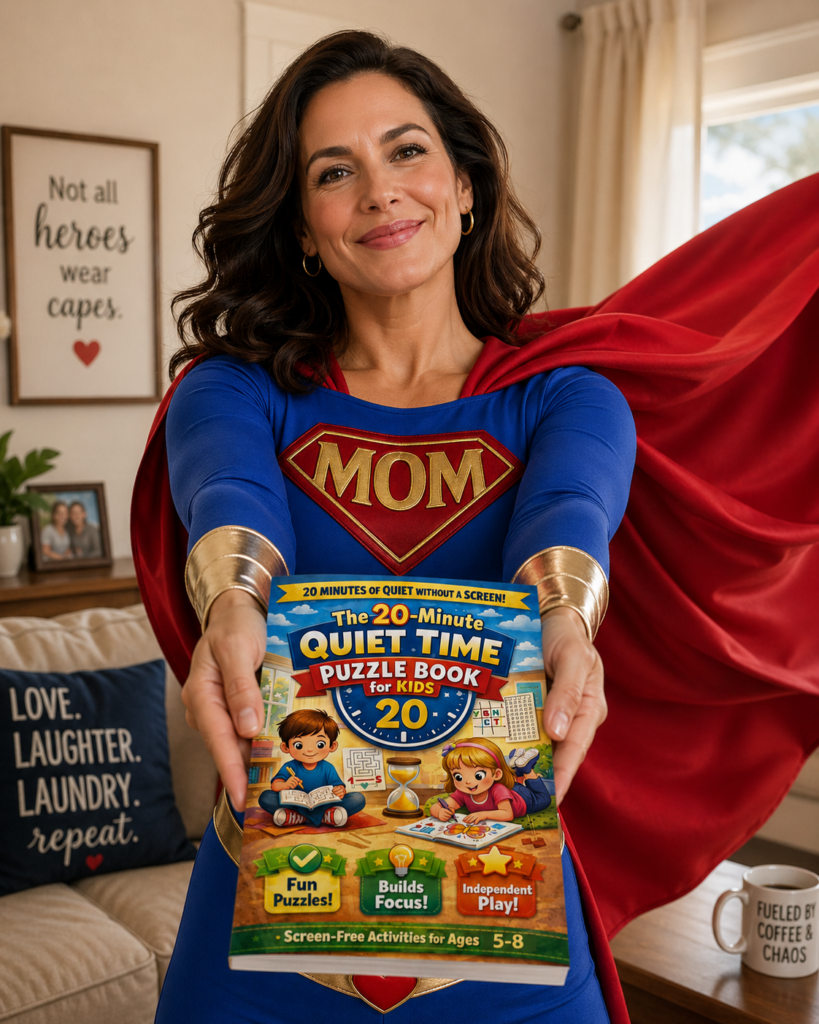
A few puzzle pages can become part of a daily routine. Even 20 minutes of quiet puzzle time can make a difference in the mood of the home.
Puzzle Books Are Great for Independent Play
Independent play is important. Kids benefit from learning how to entertain themselves without needing constant direction from adults.
Puzzle books support that skill beautifully.
Children can choose a page, work at their own pace, solve problems, and decide when they are finished. They learn to manage a task on their own.
This independence is good for kids — and helpful for parents.
It teaches children that they can do hard things, make choices, and enjoy their own company.
Puzzle Books Work Because They Are Simple
Sometimes the best tools are the simplest ones.
Puzzle books do not need flashing lights or complicated instructions. They work because they invite children to think, explore, notice, try, and finish.
They give parents an easy way to offer screen-free fun, quiet focus, and meaningful learning all in one place.
For kids, puzzle books feel like play.
For parents, they feel like a lifesaver.
That is why puzzle books work so well for families.
Final Thoughts
Puzzle books are more than just busywork. They help children build focus, patience, confidence, and problem-solving skills. They give kids a break from screens and give parents a simple way to create calm, productive moments during the day.
Whether used for quiet time, travel, waiting rooms, or everyday fun, puzzle books are a practical tool every family can enjoy.
A pencil, a puzzle, and a few quiet minutes can go a long way.