
A platypus lays eggs because it belongs to a group of mammals called monotremes, which kept the egg-laying trait of their ancestors. Laying eggs doesn’t disqualify an animal from being a mammal. Platypuses have fur and produce milk for their babies—two important mammal characteristics.
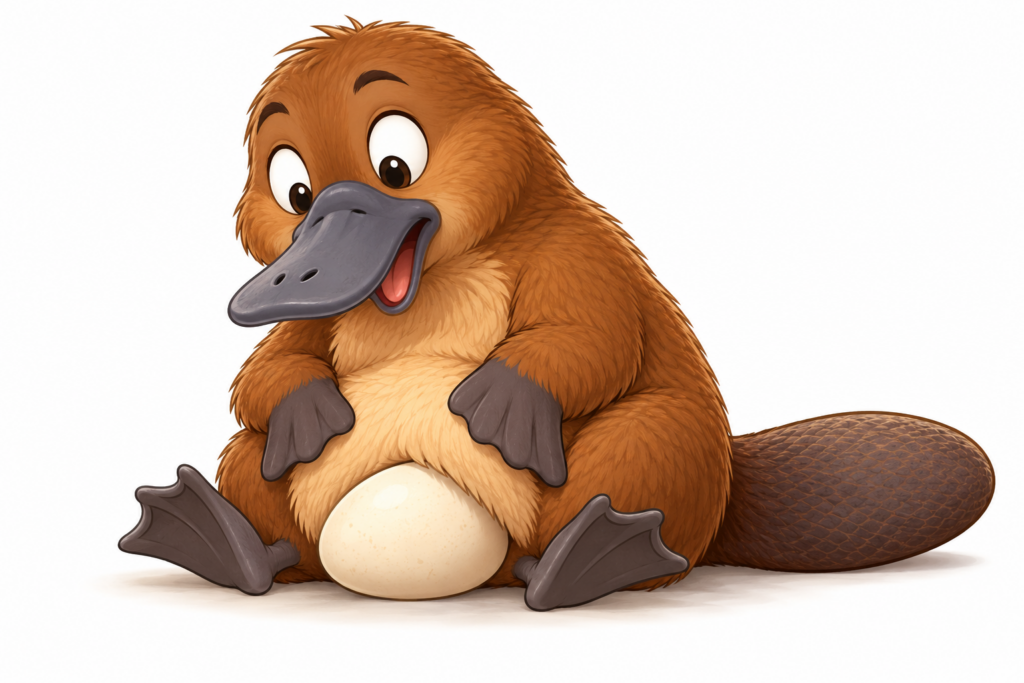
A duck-like bill. A furry body. And babies that hatch from eggs.
The platypus sounds like someone mixed up the pages of an animal instruction manual. But every part belongs! This unusual animal simply shows that mammals have more than one way of bringing babies into the world.
Don’t All Mammals Give Birth to Live Babies?
Most mammals give birth to live young, but monotremes lay eggs. The platypus and echidnas belong to this unusual group.
That means the familiar classroom rule—“mammals have live babies”—needs one small addition: most mammals do.
Here’s how the three main mammal groups compare:
| Mammal group | How their babies begin life | Examples |
|---|---|---|
| Monotremes | Hatch from eggs | Platypuses and echidnas |
| Marsupials | Are born at a very early stage and continue developing, often in a pouch | Kangaroos and koalas |
| Placental mammals | Develop inside the mother, supported by a placenta, before birth | Humans, dogs, and elephants |
All three groups are mammals. Their different reproductive systems are branches of the same family tree.
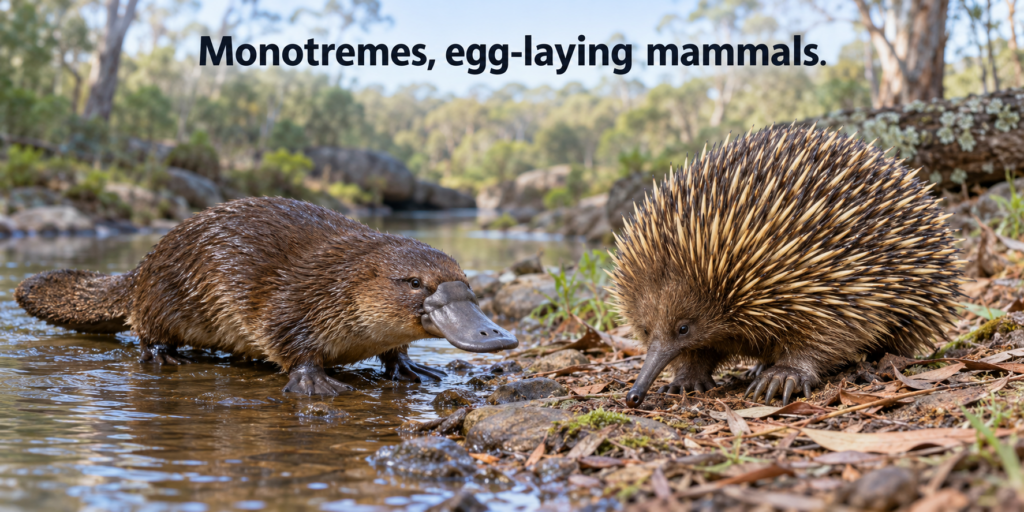
Why Did Platypuses Keep Laying Eggs?
The platypus lineage retained an ancestral way of reproducing, while the lineage leading to marsupials and placental mammals evolved live birth. Monotremes separated from that other mammal lineage long ago.
Evolution doesn’t follow a checklist that says every animal must eventually reproduce the same way.
Think of a family tree with different branches. One branch can keep an inherited characteristic while another changes over many generations. Neither branch is trying to become the other.
A platypus isn’t an unfinished mammal. It’s a mammal with its own evolutionary history.
What Happens After a Platypus Lays Her Eggs?
A female platypus prepares a nesting burrow and lays her eggs inside. She curls around them to keep them warm. After roughly ten days of incubation, the young hatch—and their mother feeds them milk.
Imagine a tiny baby breaking out of an egg and then settling down for a milk meal.
That combination might surprise us, but it’s normal for a platypus family.
How Do Baby Platypuses Drink Milk?
Female platypuses have milk-producing glands but no nipples. Their milk comes out through openings in the skin, and the babies suckle from milk patches on their mother’s belly.
It’s another reminder that familiar animals don’t show us every possible way to be a mammal.
Is a Platypus Part Duck?
No. A platypus is a mammal, not a duck–mammal mixture. Its bill may remind us of a duck’s, but its appearance doesn’t change its place in the mammal family.
Calling it part duck would be a little like calling a bat part bird because it has wings. Looking similar in one way doesn’t mean two animals belong to the same group.
A Fun Question to Ask Your Child
“If you found an animal that laid eggs, what else would you investigate before deciding whether it was a mammal?”
Would you look for fur? Find out whether it produces milk? Learn about its relatives?
The platypus teaches a wonderful science lesson: one surprising detail can make us rethink a rule—and ask a better question.
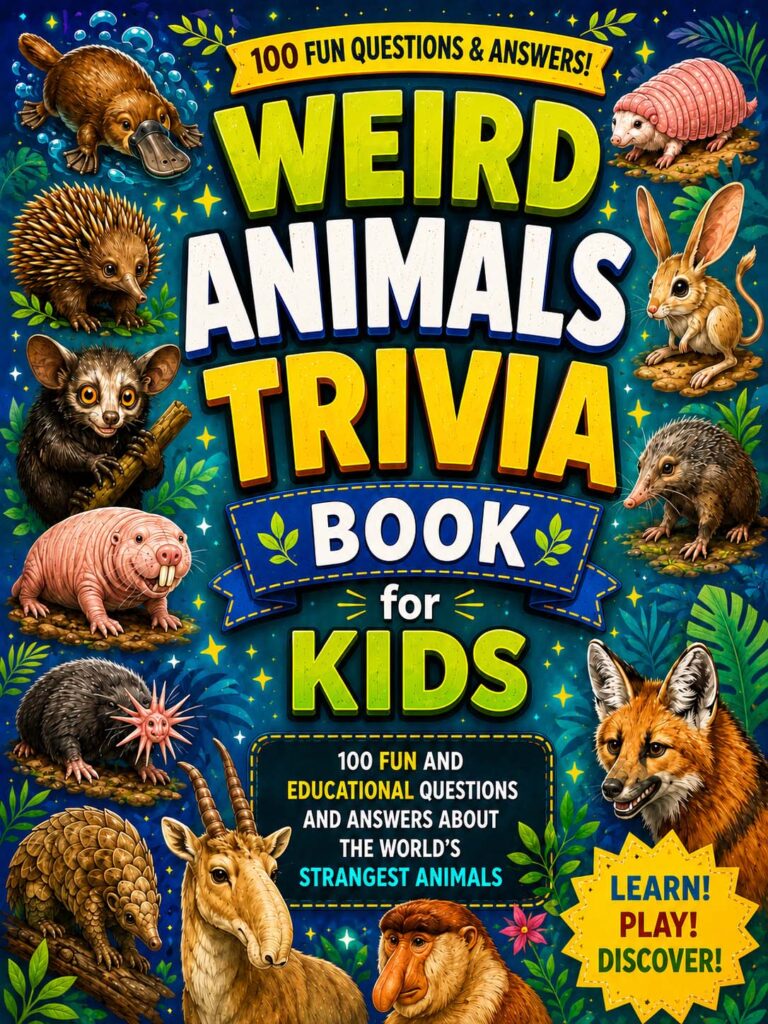
Ready to meet more animals that challenge your expectations? Explore Weird Animals, Mammals by Dean R Giles and keep discovering the wonderfully strange side of nature.