
Yes—adult male platypuses have venom. They deliver it through sharp spurs on their hind ankles, rather than through a bite. Female platypuses do not have a functioning venom-delivery system. Platypus venom can cause severe pain and swelling in people.
A furry mammal with a duck-like bill that lays eggs already sounds surprising. Add venomous ankle spurs, and the platypus starts to sound like an animal invented during a particularly imaginative classroom discussion.
But this unusual feature is real.
How Does a Platypus Deliver Venom?
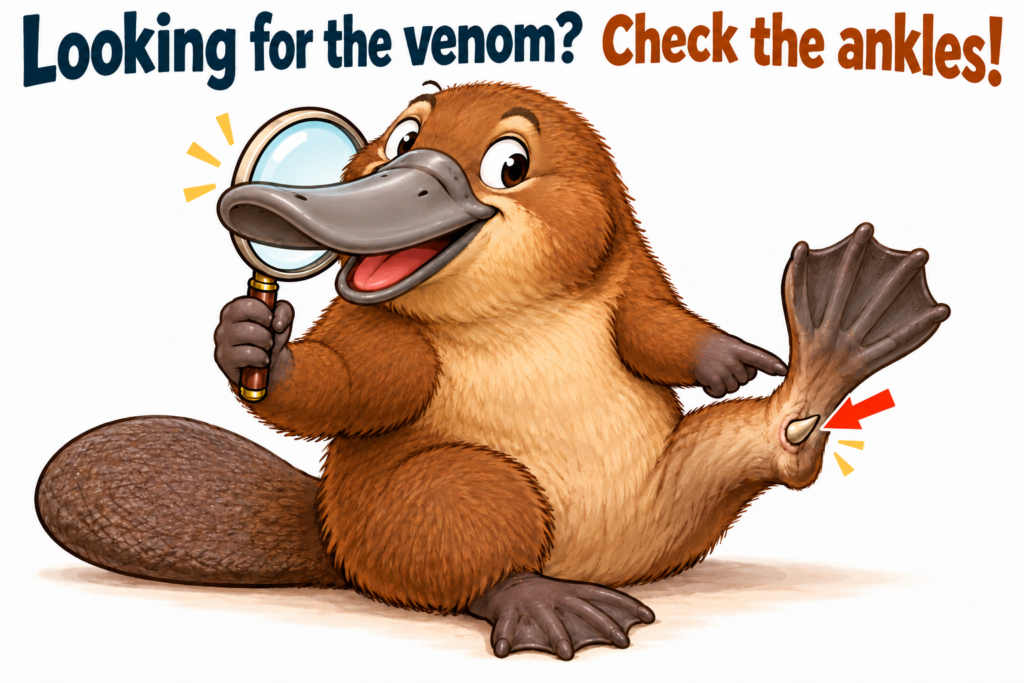
A male platypus has a sharp spur on the inside of each hind ankle, connected to a venom-producing gland. When the spur punctures another animal’s skin, venom can enter the wound.
Think of the spur as a tiny pointed delivery tool. The gland makes the venom, and the spur provides a way to inject it.
If you were looking for a platypus’s venom equipment, you might check its mouth first. You would be looking at the wrong end!
Why Does a Platypus Need Venom?

Scientists think platypus venom mainly helps males compete with other males during the breeding season. Their venom glands become more active during this period, supporting the idea that the spurs play a role in breeding-related fights.
The exact role of the venom is still being investigated. However, the connection between venom production and breeding provides an important clue.
Imagine trying to solve an animal mystery. If a special body feature becomes more active at a particular time of year, that timing can help you understand what it does.
Do Platypuses Use Venom to Catch Food?
Platypuses do not normally use venom to hunt. Its main suspected purpose is competition between males, rather than capturing a meal.
That makes this animal different from the familiar image of a venomous snake striking prey. Having venom does not mean every animal uses it in the same way.
Is Platypus Venom Dangerous to People?
Yes. Platypus venom can cause intense pain and substantial swelling. Although it is not known to be life-threatening to humans, the effects can last for weeks, and some symptoms may persist longer.
A platypus may look soft and cuddly, but it is a wild animal best watched from a respectful distance. If you find one that appears injured, contact a wildlife rescue service instead of trying to pick it up.
Cute does not always mean safe to cuddle.
Are Platypuses the Only Venomous Mammals?
No. Platypuses are among a small number of venomous mammals. Their ankle spurs make them an especially unusual example.
Many people associate venom with snakes, spiders, and scorpions. The platypus reminds us that the mammal family has a few surprises of its own.
A Fun Question to Ask Your Child
“If you discovered a new animal, what would you want to learn before deciding it was safe to touch?”
Its size? Its teeth? Its behavior? What about hidden spurs?
Discussing those questions helps children practice an important science skill: observing carefully instead of judging an animal by appearance alone.
The platypus gives us plenty to investigate—and a good reason to keep asking questions.
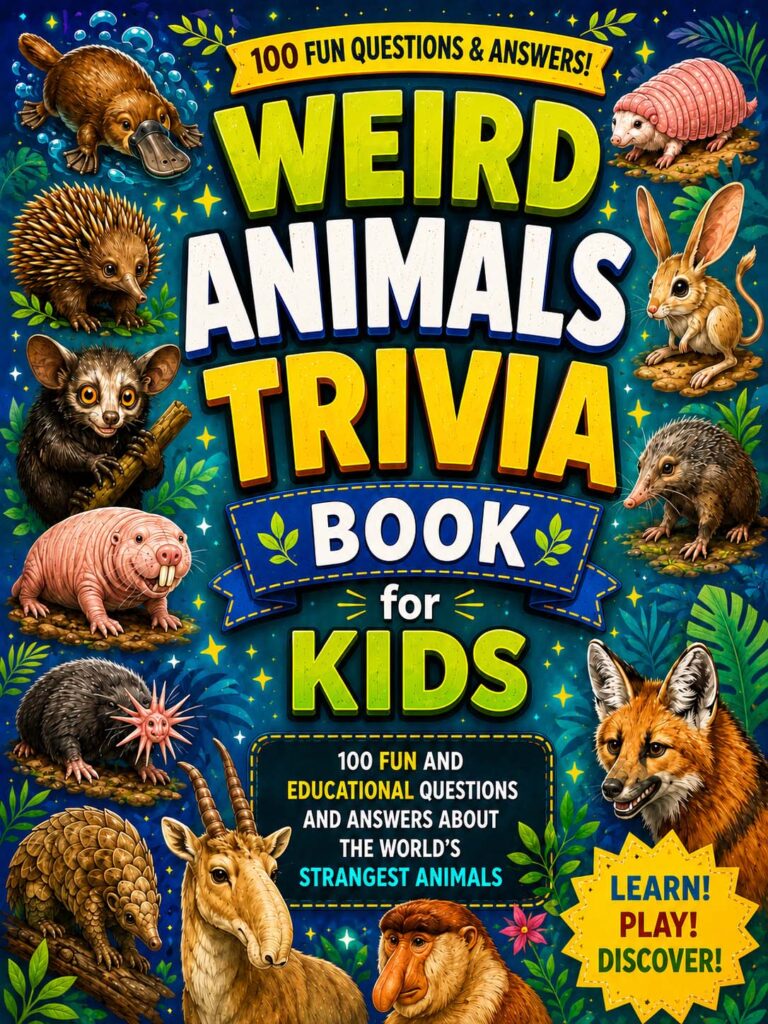
Want to discover more surprising animal abilities? Explore Weird Animals, Mammals by Dean R Giles and meet more of nature’s wonderfully unusual mammals.