
Quick answer: We can sometimes see the Moon during the day because it reflects sunlight and is above our horizon. The Moon travels around Earth, so it appears in the daytime sky during part of each month. When it is bright enough to stand out against the blue sky, we can see it—even while the Sun is shining.

Why doesn’t the Moon only come out at night?
The Moon doesn’t follow our bedtime schedule! It moves around Earth, and its position determines when it rises and sets.
Sometimes the Moon is above us at night. Other times, it is above us during the day. We tend to notice it more at night because it stands out against a dark sky.
You can tell your child:
“The Moon can be in the sky during the day or at night. We see it when sunlight lights it up and it’s in a part of the sky we can see.”
Where does the Moon’s light come from?
The Moon reflects light from the Sun. It does not make its own light.
Think of a ball with a flashlight shining on it. The bright part of the ball is visible because light bounces off its surface. Sunlight does the same thing on the Moon.
During the day, the sky is bright too. But the Moon can still reflect enough sunlight for us to spot it.
Why can’t we see the Moon every day?
Several things affect whether we can see a daytime Moon:
- Its position: The Moon must be above the horizon where you live.
- Its phase: We need enough of its sunlit side facing us to notice it.
- The weather: Clouds can hide it.
- Its distance from the Sun in the sky: A Moon appearing close to the Sun can be difficult to see against the glare.
Around the new moon, its sunlit side mostly faces away from Earth, making it difficult to see. Around the full moon, it is generally above the horizon at night.
When should we look for a daytime Moon?
Try looking in the afternoon during the week before a full moon, or in the morning during the week after one. These are often good opportunities to spot it.
You don’t need a telescope. A clear sky and a little patience may be enough.
Keep your eyes away from the Sun while searching. Never look directly at the Sun or point binoculars toward it.

Children’s Activity: Become a Daytime Moon Detective
For several days, step outside together and look for the Moon.
Have your child draw or write:
- What time did we look?
- Did we find the Moon?
- What shape did it look like?
- Where was it in the sky?
- Was the sky clear or cloudy?
If you don’t see it, record that too. Ask: “Could clouds be hiding it, or might it be somewhere we can’t see right now?”
Over time, your child may notice that the Moon’s shape and location change. A familiar object becomes a small daily discovery.
A Little Wonder Before Bedtime
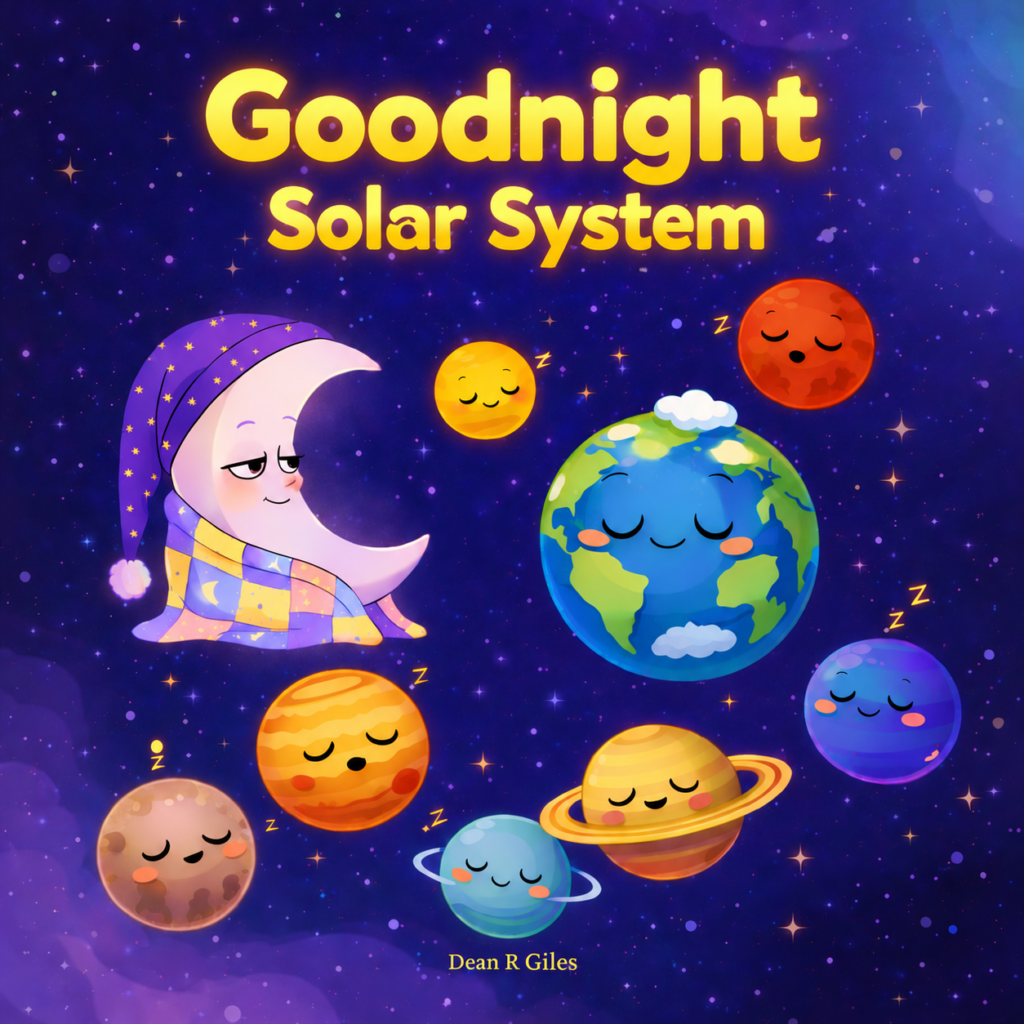
Spotting the Moon in daylight gives you something to talk about later while reading Goodnight Solar System together.
Ask your child: “We saw the Moon this afternoon. Do you think we’ll see it tonight?”
Then, if conditions allow, take a quick look outside. Your child can compare what they predicted with what they observe.
The Answer to Remember
The Moon is sometimes visible during the day because it reflects sunlight and is above our horizon. It belongs to the daytime sky as well as the nighttime sky—we simply notice it more easily after dark.