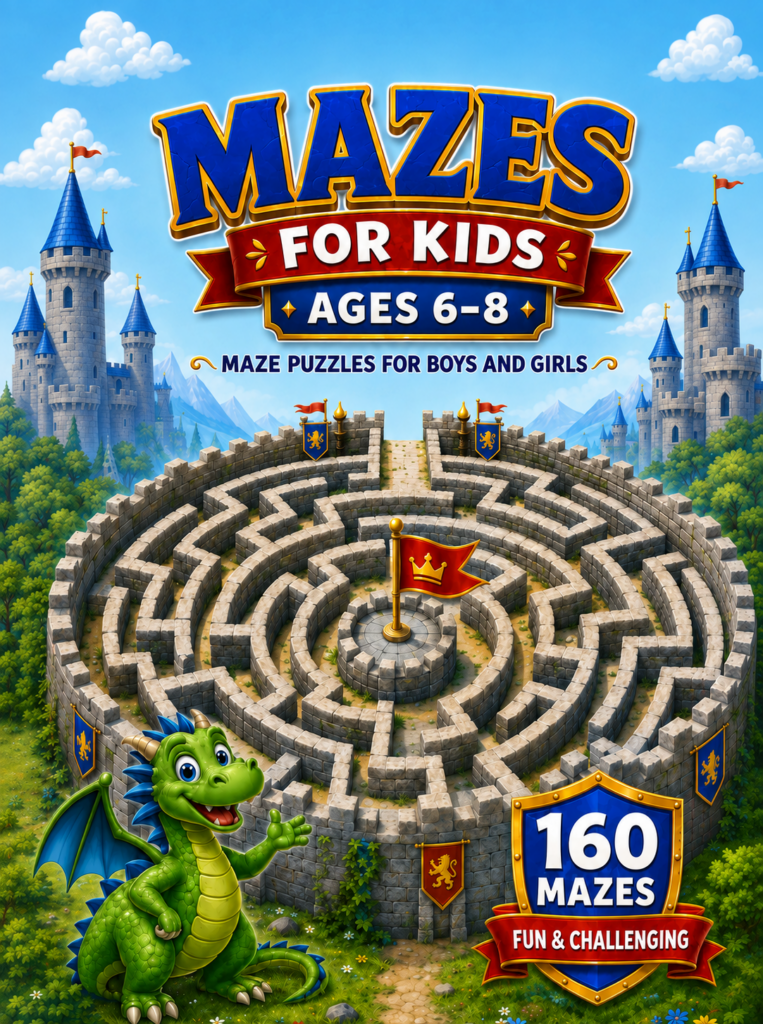

Give a child a page filled with several different activities, and there is a good chance that the maze will be one of the first puzzles they choose.
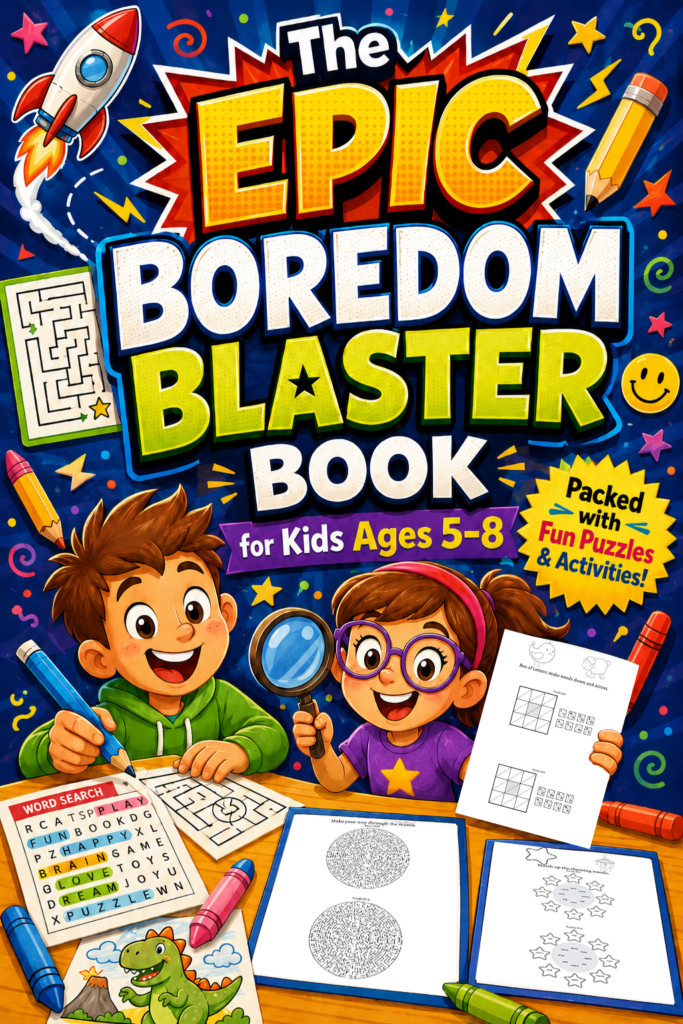
Mazes have been entertaining children for generations. They are easy to understand, exciting to explore, and satisfying to complete. A child does not need to read complicated directions or memorize a long list of rules. The goal is simple: find a path from the beginning to the end.
But what makes mazes so appealing? Here are some of the biggest reasons children return to them again and again.
Every Maze Feels Like an Adventure
A maze is more than a collection of twisting paths. To a child, it can become a miniature adventure.
The starting point may be a knight looking for a castle, a puppy trying to find its bone, or a spaceship traveling toward a distant planet. Even a simple maze creates a story with a beginning, a challenge, and a destination.
Children are not merely drawing a line across the page. They are helping a character complete a mission.
This sense of adventure makes mazes feel more like play than schoolwork.
The Rules Are Easy to Understand
Many puzzles require children to recognize words, understand clues, or perform calculations. Mazes are much more approachable.
Most children can look at a maze and immediately understand what they are supposed to do. They begin at the starting point, follow the available paths, avoid dead ends, and try to reach the finish.
Because the instructions are so simple, children can begin solving mazes independently. That independence is especially important for younger children who enjoy completing activities without constantly asking an adult for help.
Mazes Offer the Right Kind of Challenge
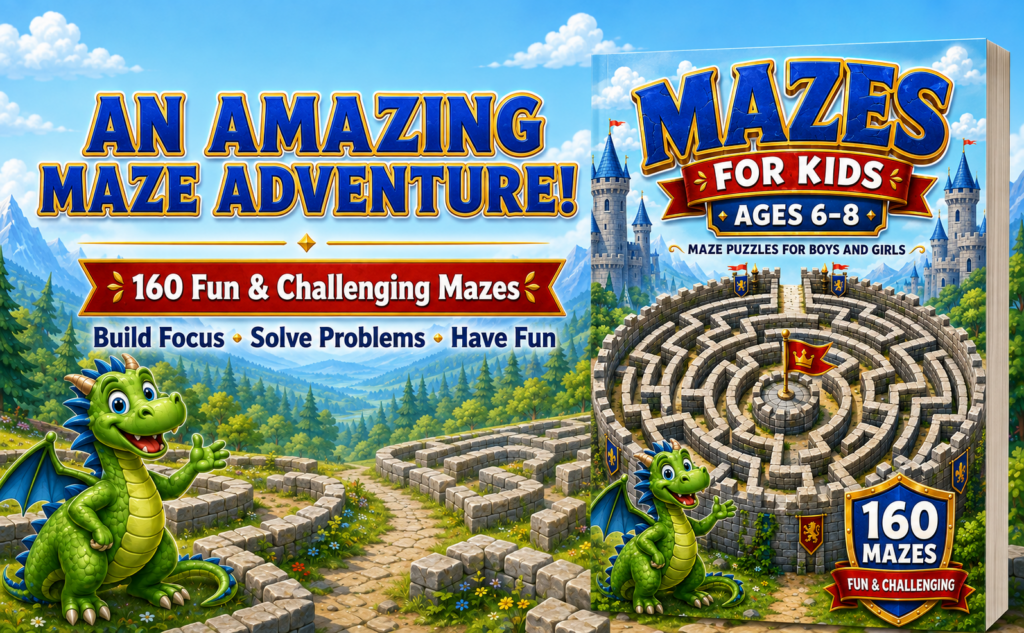
Children enjoy activities that are challenging without feeling impossible. A well-designed maze creates that balance.
There are decisions to make at every turn:
- Should I go left or right?
- Does this path lead anywhere?
- Should I continue or go back?
- Is there another route I have not tried?
A wrong turn does not mean the entire activity is ruined. The child can backtrack and try a different path. This makes mistakes feel safe and manageable.
Each wrong turn becomes part of the exploration rather than a reason to give up.
Children Receive an Immediate Reward
Mazes provide a clear and satisfying finish. When children reach the destination, they know immediately that they have completed the puzzle.
They do not need someone else to grade the page or tell them whether they succeeded. The completed path is right in front of them.
That moment of success can produce a genuine feeling of accomplishment. It encourages children to turn the page and try another maze—perhaps one that is slightly more difficult.
Mazes Help Build Confidence
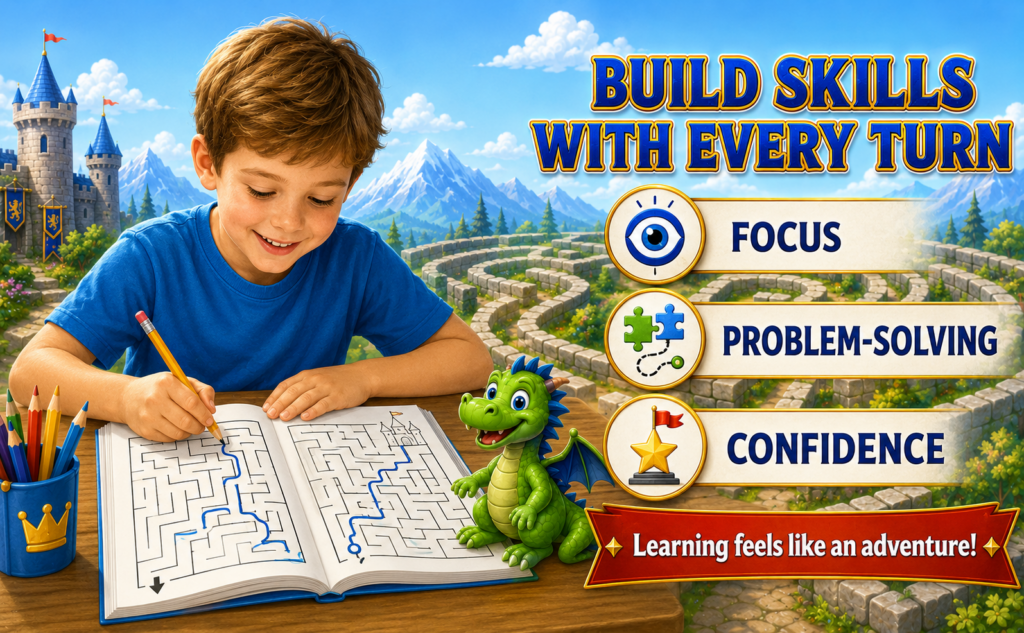
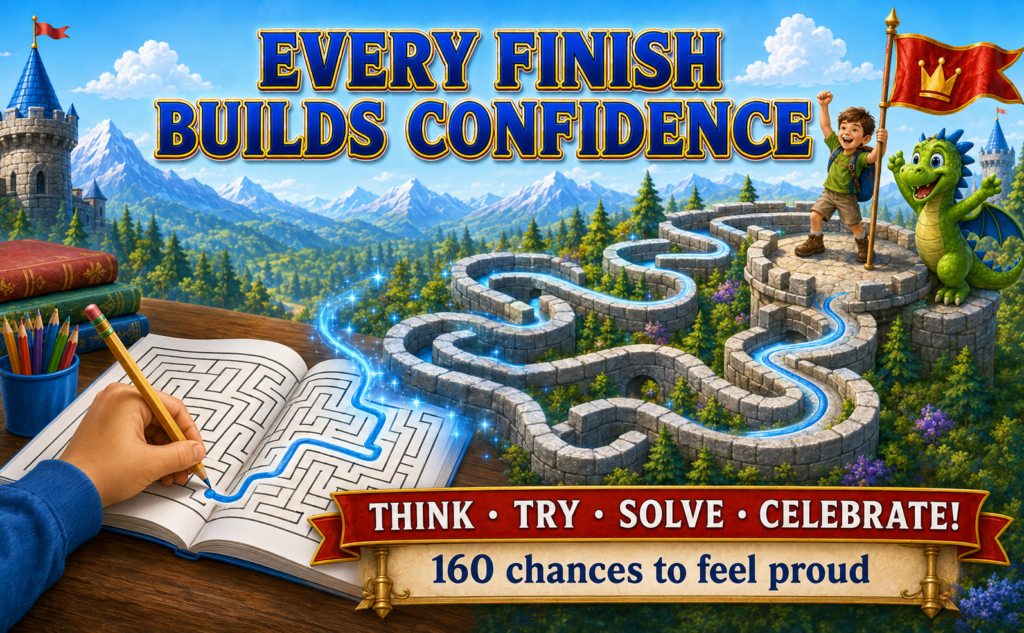
Each completed maze sends a simple but powerful message:
“I figured it out.”
That feeling matters. Children build confidence when they face a problem, make decisions, correct mistakes, and eventually succeed.
As maze difficulty increases, children can see their own progress. A puzzle that once looked confusing begins to feel manageable. Over time, they become more willing to attempt other unfamiliar challenges.
They Strengthen Problem-Solving Skills
Mazes encourage children to think ahead. Instead of moving randomly, they begin to examine possible routes and predict where those routes may lead.
While solving a maze, children practice:
- Planning
- Visual scanning
- Decision-making
- Recognizing patterns
- Remembering unsuccessful paths
- Changing strategies when necessary
These are useful problem-solving skills that can support learning in many other areas.
Mazes Make Mistakes Part of the Fun
Children are often afraid of getting an answer wrong. Mazes present mistakes differently.
A dead end is not a failure. It is simply information.
The child learns that one path does not work, returns to an earlier point, and tries another route. This helps develop persistence and flexible thinking.
Mazes quietly teach an important life lesson: when one approach does not work, you can stop, reconsider, and try something new.
They Improve Pencil Control
For younger children, mazes also provide valuable fine-motor practice.
Following a narrow path requires children to control the direction and pressure of a pencil or crayon. They must guide the line around corners and between boundaries without crossing the walls.
This can help strengthen hand-eye coordination and the small hand muscles used for handwriting. Because the activity feels like a game, children may be more willing to practice these movements than they would be on a traditional handwriting worksheet.
Mazes Allow Children to Work at Their Own Pace
Mazes do not need to be timed. A child can study the puzzle, test different routes, take a break, and return later.
This makes mazes useful for children with different ability levels and learning styles. Some children quickly scan the entire page before beginning. Others solve the maze one turn at a time.
Both approaches can lead to success.
They Provide Screen-Free Entertainment
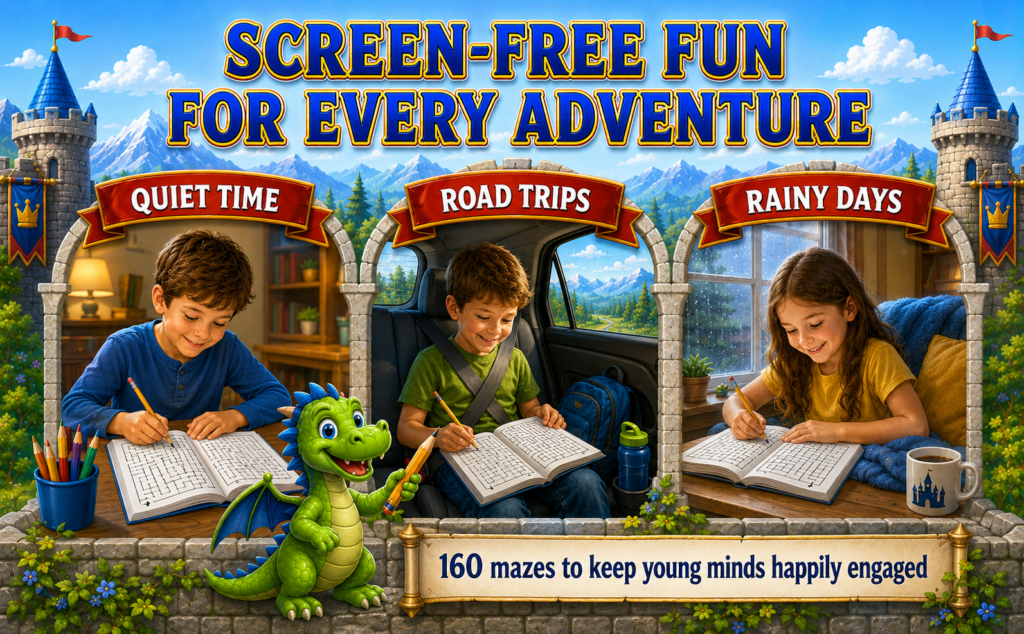
Mazes are an easy way to occupy children without handing them a phone or tablet.
A maze book can be used:
- During car trips
- In waiting rooms
- At restaurants
- On rainy afternoons
- During quiet time
- Between school assignments
- Before bedtime
- While traveling
All a child needs is a maze and a pencil, making maze books convenient for both parents and teachers.
There Is Always Another Maze to Explore
Mazes can be created in almost any theme or difficulty level. Children can guide animals through forests, help race cars reach the finish line, explore castles, travel through outer space, or complete pixel-style video-game quests.
The paths can also grow more complicated as children’s skills improve. This variety keeps the activity fresh while preserving the simple goal children already understand and enjoy.
A Simple Puzzle With Lasting Benefits
Children love mazes because they combine imagination, challenge, choice, and accomplishment in one entertaining activity.
They are simple enough to begin without much instruction but interesting enough to hold a child’s attention. Along the way, children practice planning, pencil control, persistence, concentration, and problem-solving.
Most importantly, mazes allow children to experience the pleasure of finding their own way.
Every twist, turn, and dead end is part of the journey—and reaching the finish makes the adventure worthwhile.